
Mono Topper vs Silk Top: Which Is Better?
Hair Topper Base Guide
Neither a mono topper nor a silk top is universally better. A mono topper is usually the stronger starting point when airflow, a flatter feel, and practical everyday wear matter most. A silk top is often the better choice when your highest priority is a highly concealed parting area because its layered construction hides the hair knots. The final result also depends on base size, density, length, edge materials, clip placement, and fit.


These are VivaCrown product examples for visual reference, not a controlled laboratory comparison. Exact comfort and appearance vary by base size, density, length, perimeter construction, and fit.
Quick Answer
Choose Mono If
You prioritize an open mesh feel, everyday practicality, and airflow in a comparable base size.
Choose Silk Top If
You prioritize concealed knots and the most scalp-like appearance along the visible parting area.
Most Important Rule
Compare the exact base size, density, hair length, clip layout, and parting area before deciding.
Base Construction 01
What Is a Mono Topper?
A mono topper uses a fine monofilament mesh as the foundation of the hairpiece. In many designs, individual hairs are hand-tied into the mesh so they can move in different directions and create a natural-looking part. The mesh is usually more open than a layered scalp material, which is why mono bases are commonly considered for lightweight, breathable everyday wear.
A mono base can look very natural, especially when the mesh color, knot size, density, and parting direction suit the wearer. At very close range or under harsh overhead light, some knots or mesh texture may still be visible. The exact result depends on the individual product rather than the word "mono" alone.
Mono is usually a strong choice for: long daily wear, warm environments, flexible styling, and shoppers who prefer a less layered top construction.

Base Construction 02
What Is a Silk Top Hair Topper?
A silk top uses a layered construction designed to place the hair knots beneath an upper scalp-like surface. Because the knots are concealed, the visible part can create the impression that the hair is growing directly from the scalp. This is the main reason silk tops are often selected when close-up parting realism is the highest priority.
The additional layers can make a silk top feel more structured than an open mono mesh of a similar size. That does not automatically mean it will feel heavy or uncomfortable. Base size, density, perimeter materials, clip count, and head shape all affect how the topper feels in real life.
Silk top is usually a strong choice for: visible part lines, close-up scalp realism, straight or sleek styles, and wearers who want the knots hidden beneath the top layer.

At a Glance
Mono Topper vs Silk Top: Side-by-Side Comparison

| Feature | Mono Topper | Silk Top |
|---|---|---|
| Scalp effect | Natural mesh-based parting; knots may be more visible at very close range. | Layered top conceals knots for a highly scalp-like visible part. |
| Breathability | Usually more open and airy in a comparable size and construction. | Can still be comfortable, but the layered top may feel less open. |
| Base feel | Often flatter, lighter, and more flexible. | Often slightly more structured at the parting area. |
| Parting | Can offer flexible or free parting when the hand-tied area supports it. | Can offer free parting with stronger knot concealment in the silk area. |
| Daily wear | Often preferred when airflow and a less layered feel are priorities. | Often preferred when the appearance of the visible part matters most. |
| Handling | Hand-tied knots still require gentle brushing and washing. | Layered top and hand-tied areas require careful washing and detangling. |
| Price | Varies by hair quality, size, length, density, and craftsmanship. | May involve more complex construction, but is not automatically more expensive. |
| Best starting point | Airflow, practical daily wear, and a flexible mesh base. | Hidden knots and the most scalp-like appearance at the part. |
This table compares common construction tendencies. Exact performance varies by base size, density, perimeter material, hair length, clip layout, and individual fit.
Close-Up View
Which Looks More Natural: Mono or Silk Top?

Silk top generally has the advantage when you are judging the visible part at close range. The layered top hides the knots, so the part can look smoother and more scalp-like under bright light, in photographs, or when someone is standing close to you.
Mono can still look highly natural at a normal social distance. A well-chosen mesh color, fine knots, realistic density, correct part placement, and good blending can matter as much as the base type. A mono topper with the right density and color may look more natural than a silk top that is too dense, too large, or poorly matched.


Check both bases in real-life lighting: indirect window light, indoor overhead light, phone photos without filters, close-up parting views, and normal conversation distance.
Comfort and Weight
Which Is More Breathable and Lightweight?
In a fair comparison between similar sizes and densities, a mono base usually feels more open because air can move through the mesh. This can make mono appealing for long wear, warm climates, or anyone who dislikes a layered feeling at the crown.
A silk top can still be lightweight and comfortable, especially in a compact base with moderate density. The top construction is only one part of the comfort equation. A large base, long hair, high density, a thick perimeter, or poorly positioned clips can make either type feel warmer or heavier.
Look Beyond the Base Name
Check the actual base dimensions, hair length, density, perimeter material, and total product weight.
Test Your Real Routine
Consider how many hours you wear a topper, your local climate, and whether you spend time under strong indoor lighting.
Watch Clip Pressure
Clips should anchor to stronger surrounding hair rather than repeatedly pulling on the weakest area.
Styling Freedom
Which Is Better for Parting and Styling?
Both mono and silk top toppers can support flexible parting, but the product must actually have a sufficiently large hand-tied or free-part area. A base labeled "mono" or "silk top" does not automatically guarantee that the entire top can be parted in any direction.
A mono base allows the hair to move naturally through the mesh, while a silk top adds the advantage of concealed knots in the visible parting area. For shoppers who frequently change from a middle part to a side part, the most important details are the dimensions of the parting zone, ventilation direction, and whether the part is fixed or free.
Parting Checklist
- Confirm whether the SKU is fixed-part, multi-directional, or free-part.
- Check how large the hand-tied parting area is.
- Ask whether the front edge is intended to sit behind the natural hairline.
- Use light moisture and gentle, low heat when training a new part.
- Avoid holding hot tools directly against the base or knots.
Maintenance
Care, Durability, and Daily Handling
Mono is often considered more forgiving for frequent wear because the base is less layered, but a hand-tied mono topper can still shed if the knots are rubbed, pulled, or repeatedly exposed to heavy conditioner. A silk top can remain beautiful for a long time when the layered top and parting area are handled gently. There is no responsible way to promise that one base will always last longer than the other.
Care Rules for Both Base Types
- Detangle from the ends upward while supporting the base with your hand.
- Wash in lukewarm water with gentle shampoo; do not scrub or twist the base.
- Apply conditioner mainly to the mid-lengths and ends, away from the knots.
- Blot with a towel and air-dry whenever possible.
- Use heat protectant and keep direct heat away from the base.
- Remove the topper before sleeping, showering, or swimming.
- Rotate clip positions and stop wearing the topper if you feel persistent pulling or discomfort.
Decision Guide
Which Base Should You Choose?
| Your Priority or Situation | Best Starting Point | Why |
|---|---|---|
| Long wear and heat sensitivity | Mono | The mesh is usually more open in a comparable construction. |
| Close-up scalp realism | Silk top | The upper layer conceals the knots along the visible part. |
| Frequent part changes | Either | Choose a true free-part or multi-directional SKU with a large enough parting area. |
| Very fine or fragile natural hair | Compare weight and clips | Base size, density, and clip placement may matter more than mono versus silk. |
| First-time topper buyer | Start with fit | A correctly sized, moderate-density topper is usually easier to blend. |
| Unsure after viewing photos | Send crown photos | A recommendation can consider thinning area, color, length, texture, and daily-wear needs together. |
Compare Fairly
How to Compare a Mono and Silk Top Correctly
A useful comparison should isolate the base construction instead of mixing several product differences together.
- Match the base size: compare pieces with similar dimensions.
- Match the density: a 130% topper will normally feel different from a 150% topper.
- Match length and texture: long curls add more bulk and weight than short straight hair.
- Match hair quality: compare similar human-hair grades and processing levels.
- Match attachment: clip count, PU edges, lace edges, and perimeter stitching affect comfort.
- Use the same model and lighting: keep the angle, part, exposure, and distance consistent.
Important Testing Note
Holding a base toward a window is a useful visual demonstration of openness, but it is not a scientific airflow test. Describe what the viewer can see without turning a simple photo into a laboratory claim.
Shop the Comparison
VivaCrown Mono and Silk Top Options to Explore
Explore two mono and two silk-top options below. Each complete product image, product name, and call-to-action links directly to the current product page. Options and availability may change.
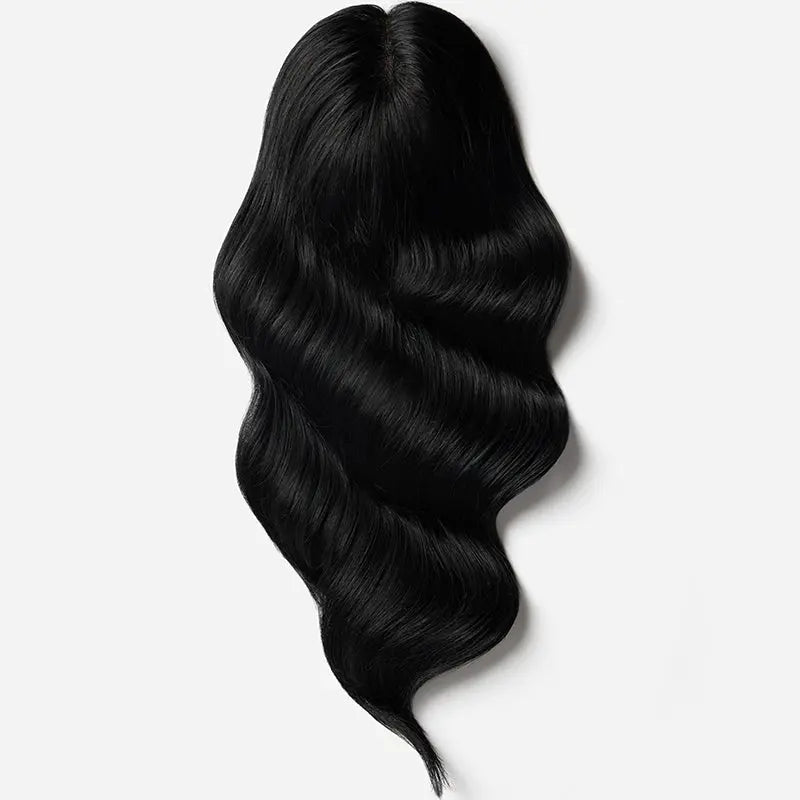
Mono · 10 × 12 cm
Premium Mono Scalp Base Hair Topper
Full monofilament base with a PU perimeter, flexible parting, and straight or wavy options.
View current options →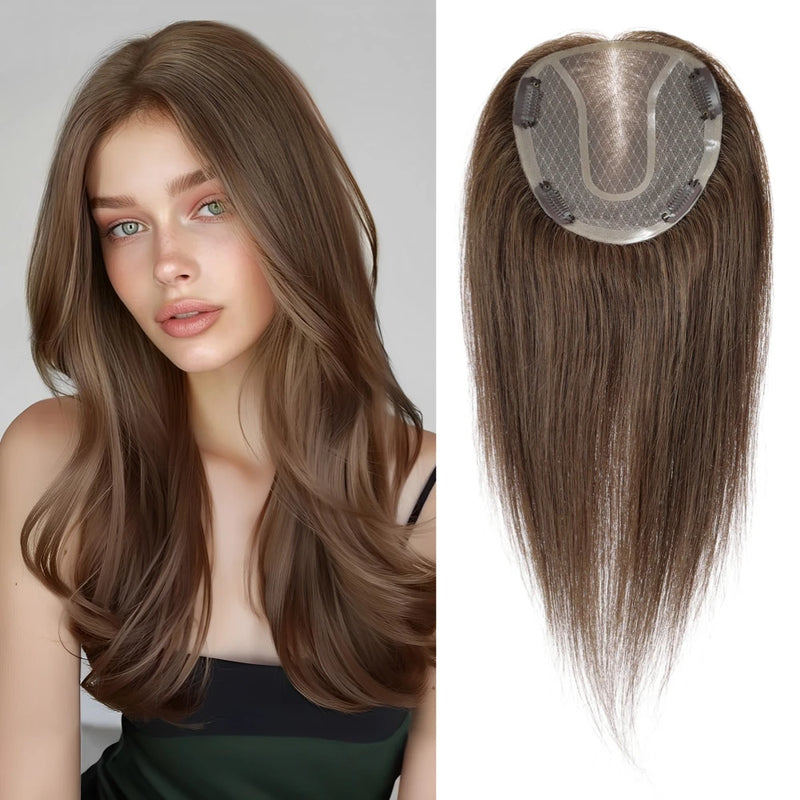
Mono · 12 × 13 cm
Remy Human Hair Topper with Mono Base
A wider full-mono option with medium density and four clips for crown coverage.
View current options →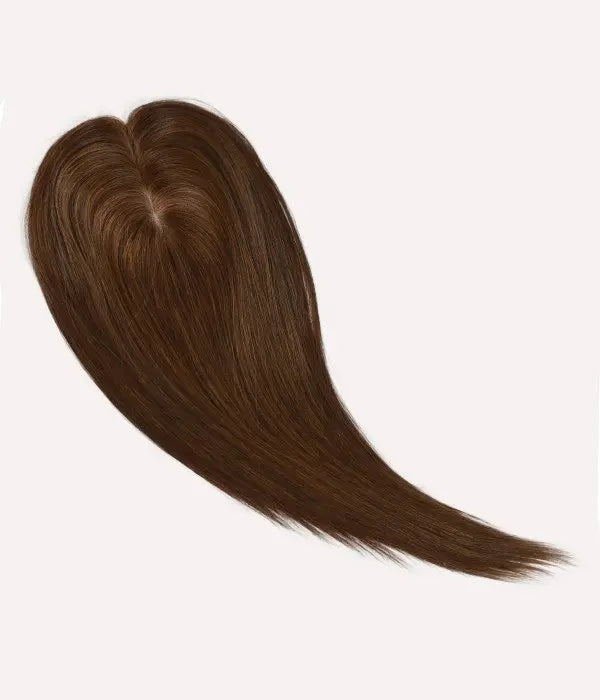
Silk Top · Free Parting
Silk Top Remy Human Hair Topper
Natural-straight Remy hair with a layered top designed to hide knots along the visible part.
View current options →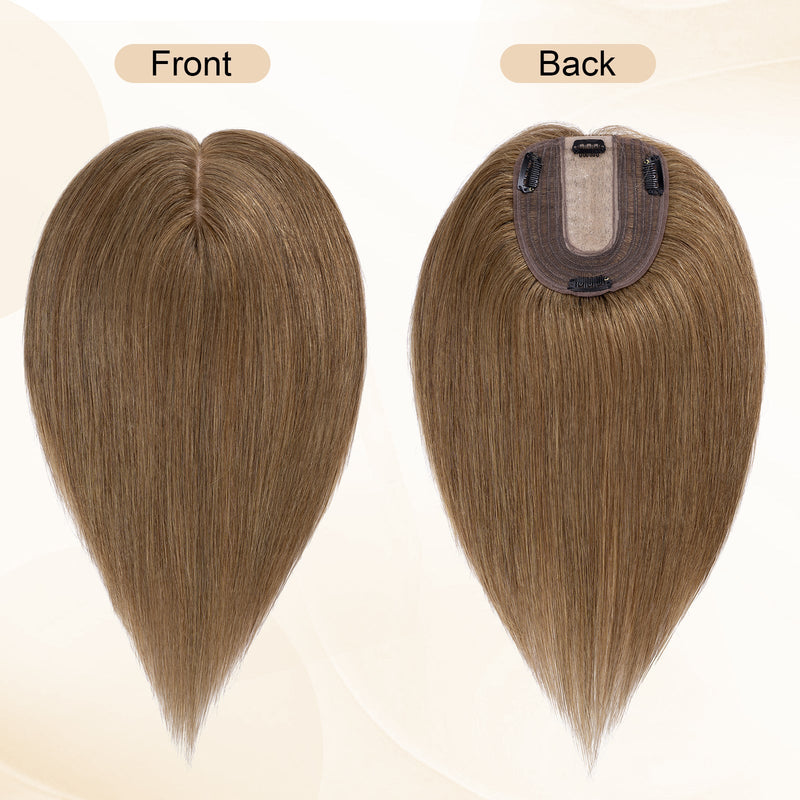
Silk Base · 12 × 13 cm
Silk Base Clip-in Crown Hairpiece
A natural-straight human hair option with a silk base and four pressure-sensitive clips.
View current options →Final Recommendation
The Better Base Depends on Your Priority
Choose mono when a more open mesh, lighter-feeling construction, and practical daily comfort are your main priorities. Choose silk top when concealed knots and a highly scalp-like visible part matter most.
The most natural and comfortable topper is not simply the one with the more premium-sounding base. It is the one whose base size, density, length, color, texture, and clip placement match your own hair and coverage needs.
Common Questions
Frequently Asked Questions
Does a silk top always look more natural than mono?
A silk top usually gives stronger knot concealment at the visible part, which can make it look more scalp-like in close-up views. That does not mean every silk top will look better than every mono topper. Correct base size, realistic density, suitable scalp color, accurate hair-color matching, and good blending can have a larger effect on the finished result.
Is a mono topper cooler than a silk top?
In comparable sizes and densities, mono is usually the more open construction because air can pass through the mesh. A silk top has additional layers around the parting area, so it may feel more structured. Comfort also depends on total base size, density, hair length, perimeter material, clip pressure, and wearing time.
Does a silk top feel bulky?
A silk top can feel slightly more structured at the part because the construction uses layers to hide the knots. Whether it feels bulky depends on the exact product. A smaller base with moderate density may sit naturally, while any oversized or high-density topper can feel fuller than expected.
Can both mono and silk top toppers be parted freely?
They can, but only when the specific design includes a free-part or multi-directional hand-tied area. Some toppers have a fixed part, limited parting zone, or machine-made sections that restrict movement. Confirm the dimensions of the parting area before ordering.
Which base is better for everyday wear?
Mono is often selected for everyday wear because the mesh can feel open, flexible, and less layered. Silk top can also be suitable for regular wear when the base is correctly sized and the wearer prioritizes a realistic part. The better daily option is the one that stays secure without pulling and remains comfortable for your normal wearing schedule.
Which lasts longer, mono or silk top?
There is no universal winner. Mono can be more forgiving because it has fewer layers, but hand-tied knots can still loosen with rough brushing, rubbing, or conditioner applied directly to the base. Silk top construction needs gentle handling around the layered parting area. Lifespan depends heavily on wear frequency, washing, heat styling, storage, and daily handling.
Is a silk top always more expensive?
No. Silk top construction can involve additional craftsmanship, but the final price also reflects base size, hair length, density, hair quality, color work, texture, customization, and availability. Compare complete specifications rather than using the base material as the only measure of value.
How do I know which base size I need?
Measure the thinning area from front to back and side to side, then choose a base that extends beyond the weakest area so the clips can attach to stronger surrounding hair. A base that is too small may place clips on fragile hair, while an unnecessarily large base may feel warmer or fuller.
Can VivaCrown recommend mono or silk top from photos?
Yes. Send clear photos of your crown, part line, side view, and overall hair in indirect natural daylight. Include approximate thinning-area measurements, usual parting direction, natural hair length, texture, preferred density, and expected daily wearing time.
Personalized Help
Not Sure Which Base Is Right for You?
Send VivaCrown clear daylight photos of your crown and part line. Tell us your preferred length, texture, daily wearing time, and whether comfort or scalp realism matters most.
Hair toppers are cosmetic hair solutions and do not treat the underlying cause of hair loss. Consult a qualified healthcare professional if you experience sudden, severe, painful, or unexplained hair loss or scalp symptoms.