

How to Wear a Hair Topper Step by Step
To wear a hair topper correctly, detangle your natural hair, open all pressure clips, position the topper so the base covers the thinning area, secure the clips onto stronger surrounding hair, and make sure the base lies flat without pulling. For most standard mono or silk-top toppers, the front edge usually sits slightly behind your natural hairline so your own front hair can help conceal the edge. After securing the topper, gently blend your natural hair with the topper and check that it feels secure, comfortable, and pain-free.
Quick Answer
Place the topper so the base fully covers the thinning area and the front edge suits your base design.
Attach clips to stronger surrounding hair rather than repeatedly clipping into the weakest area.
Fasten the front, sides, and back while keeping the base smooth and flat.
The topper should feel secure without pinching, pulling, soreness, or scalp strain.

Before You Start
Preparing Your Hair and Topper Before Installation
Good preparation helps the base sit flatter and makes the topper easier to secure. Before clipping in your topper, complete these three steps.
Brush gently so the clips can anchor without catching knots. If your roots are very slippery, a small amount of dry shampoo or texturizing spray can add grip.
Check the underside of the topper and fully open all pressure clips before placing the base on your head.
If your topper sits behind the natural hairline, leave out a small amount of front hair so it can blend over the front edge.

Step-by-Step
How to Wear a Hair Topper
Position the Base Correctly
Hold the topper above the thinning area with both hands. For many standard mono and silk-top toppers, the front edge sits slightly behind your natural hairline. Lace-front designs may be positioned closer to the front. Use the exact product design as your guide.
Secure the Front Clips First
Keep the front of the base flat while sliding the front clip teeth into stronger surrounding hair. Press each clip closed once it has a secure anchor point. Avoid repeatedly clipping into the most fragile area.
Smooth the Base and Fasten the Sides and Back
Use one hand to keep the front stable while smoothing the base toward the crown. Secure the side clips and then the back clips. The base should lie flat without bubbling, lifting, or creating uncomfortable tension.
Blend with Your Natural Hair
Gently comb your natural leave-out hair through the topper hair. Human hair toppers can usually be restyled with appropriate heat protection, but always follow the instructions for the specific product before applying hot tools.
Fit Check
Right vs Wrong Clipping Technique
Use this comparison to check whether your topper is secure without placing unnecessary tension on your natural hair.
| Feature | Correct Technique | Incorrect Technique |
|---|---|---|
| Clip Anchor Point | Attached to stronger hair around the thinning area. | Repeatedly clipped directly into the weakest or actively shedding area. |
| Base Tension | Smooth and flat with no painful pulling. | Too loose and moving, or stretched tightly enough to create discomfort. |
| Scalp Sensation | Secure, stable, and comfortable. | Sharp pinching, soreness, pulling, or headache. |
| After Placement | The topper stays stable during normal head movement. | The base shifts, lifts, or needs constant readjustment. |
Daily Wear Tips
Tips for Extra Security and All-Day Comfort
If you wear a topper frequently, slightly vary the attachment points so the exact same small section of hair is not carrying tension every day.
For very fine hair or limited anchor hair, a wig grip or another compatible attachment method may help reduce reliance on clips. Check that the method suits your specific topper.
After clipping in the topper, move your head naturally and gently check the base. It should feel stable without needing to be painfully tight.
FAQ
Frequently Asked Questions About Wearing Hair Toppers
How tight should hair topper clips feel?
Topper clips should feel secure but not painful. If you notice sharp pulling, pinching, persistent soreness, or a headache, open the clips and move them to a stronger or more comfortable section of hair.
Can a hair topper slide or fall off?
A correctly fitted topper can stay secure during normal daily activity, but stability depends on the base size, clip placement, available natural hair, and attachment system. If the topper shifts easily, check the fit and clip positions before wearing it for a full day.
How long does it take to put on a hair topper?
Application time varies by experience, base size, number of clips, and how much blending or styling you do afterward. Beginners may need several minutes at first, while regular wearers often become much faster with practice.
Should I wear my topper at the hairline or behind it?
Many standard mono and silk-top toppers are designed to sit slightly behind the natural hairline so your own front hair can help conceal the edge. Lace-front toppers may be designed for placement closer to the hairline. Follow the construction of the specific product.
What should I do if the clips pull my hair?
Remove the topper and reposition the clips onto stronger surrounding hair. You can also rotate attachment points between wears. Persistent pain or pulling is a sign that the fit, base size, or attachment method may need to be adjusted.
VivaCrown Picks
Easy-to-Wear Hair Toppers to Explore
These two options use different coverage sizes, so choose according to your thinning area, desired volume, and available anchor hair.

Silver Full Hand-Tied Mono Base Topper
A breathable hand-tied mono option for women who want natural crown coverage and flexible parting.
View Product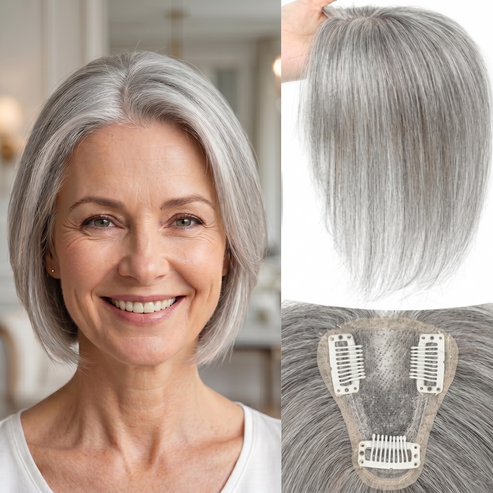
2.7 × 3.5 in Lightweight Seamless Hair Topper
A compact option for localized part-line coverage, root volume, and smaller thinning areas.
View ProductNeed Help Choosing the Right Fit and Color?
Send VivaCrown clear natural-light photos of your crown and hair. We can help you compare base size, color, coverage, and suitable topper options.
Hair toppers are cosmetic hair solutions and do not treat the underlying cause of hair loss. Stop wearing a topper if it causes persistent pulling, pain, or scalp irritation.